







Preparing Your Home for Winter: Essential Maintenance Checklist
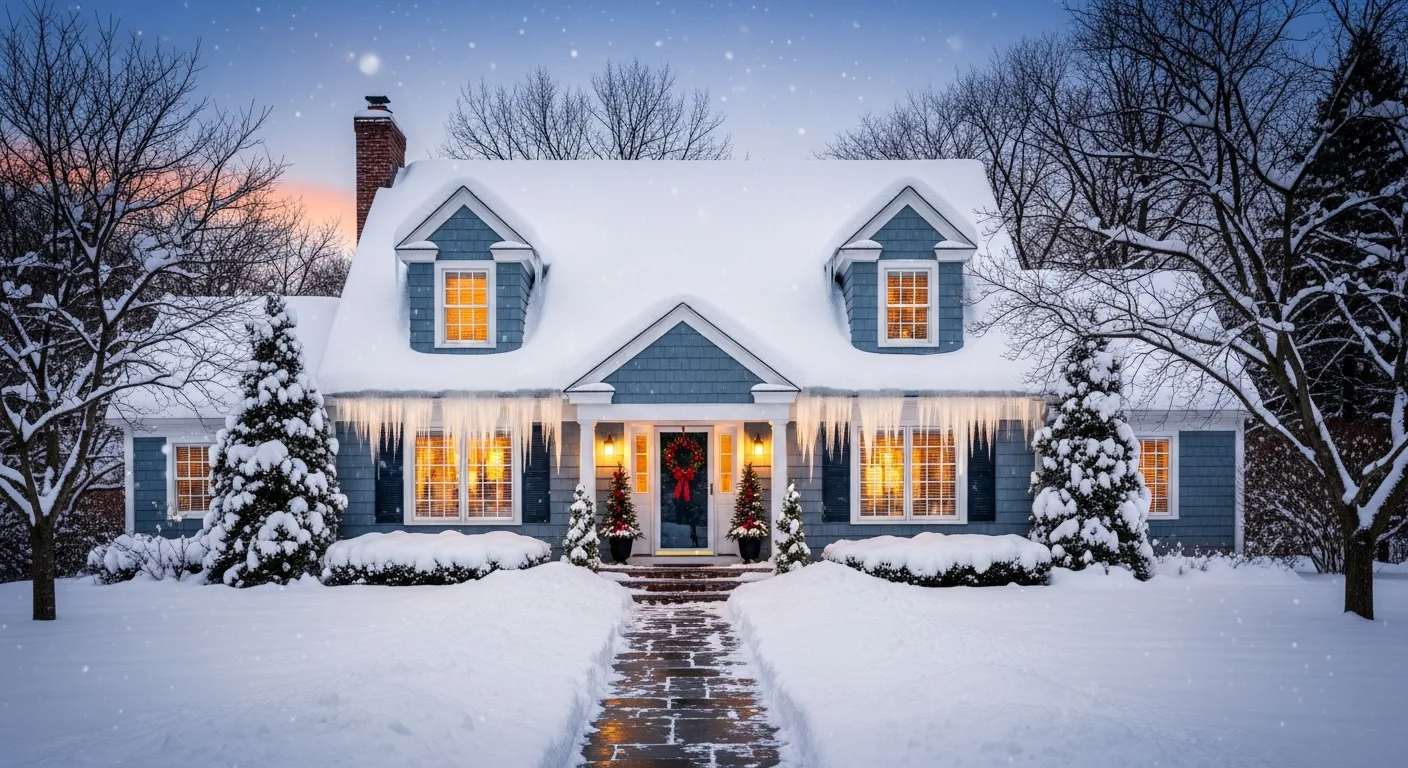
A comprehensive guide to winterizing your home and preventing costly cold-weather damage.
Outside the house
Disconnect and drain hose bibs
A garden hose left attached to an outdoor spigot is the #1 cause of burst pipes inside exterior walls. Disconnect every hose, drain them, store them inside, then turn off the indoor shutoff for any non-frost-free hose bibs and open the outdoor valve to drain residual water.
Clean and inspect gutters
- Remove leaves and debris from every section
- Flush downspouts with a hose
- Confirm downspouts extend at least 4 feet from the foundation
- Look for sagging brackets, separated seams, or loose fasteners
Clogged gutters cause ice dams, which back water under shingles and into ceilings. Average ice-dam damage claim: $5,500.
Inspect the roof
From the ground (or a drone if you have one): check for missing or curling shingles, flashing gaps around chimneys and vents, and damaged ridge caps. Anything questionable warrants a pro inspection now — repairs in 20-degree weather cost double.
Trim trees away from the house
Aim for at least 6 feet of clearance from the roof. Ice-loaded branches snap and cause some of the most expensive winter damage in the country.
Seal exterior gaps
Caulk around windows, doors, vents, and any penetration in your siding. Mice need only a 1/4-inch gap to enter, and warm air leaks out the same holes.
Inside the house
Service the heating system
- Replace the air filter (do this every 1–3 months all winter)
- Schedule a professional tune-up if you haven't had one in 12+ months
- Test carbon monoxide detectors — replace if older than 7 years
- Reverse ceiling fans to clockwise (low speed) to push warm air down
Insulate exposed pipes
Foam pipe sleeves cost $0.75 per foot at any hardware store. Wrap any pipe in a basement, crawlspace, garage, or exterior wall. For pipes that have frozen before, add UL-listed pipe heating cable.
Test the sump pump
Pour 5 gallons of water into the sump pit. The pump should kick on within seconds and fully drain the pit. If it doesn't, replace it before the spring melt — sump pumps last 7–10 years.
Set the thermostat strategically
- Never below 55°F, even when traveling
- Open cabinet doors under sinks on exterior walls during cold snaps
- Let faucets drip pencil-lead thin in extreme cold
Test smoke and CO detectors
Replace batteries, press the test button, and confirm chirp. Heating-related fires spike in winter — your detectors are your first defense.
The "before you travel" checklist
If you're leaving for more than 48 hours during winter:
- Set thermostat no lower than 55°F
- Shut off main water supply (if you can drain pipes safely)
- Leave cabinet doors open under sinks on exterior walls
- Have a neighbor check the house every other day
- Install a Wi-Fi temperature alert ($25–$50, sends a phone alert if temp drops)
- Confirm someone has a key and the alarm code
The "first hard freeze" emergency kit
Keep these in an accessible spot:
- Hairdryer (for thawing exposed pipes — never use an open flame)
- Bucket and old towels
- Knowledge of where your main water shutoff is and that it actually works (test it now, not at 2 a.m.)
- Emergency plumber phone number saved in your phone
- Flashlights with fresh batteries on every floor
What to do if a pipe freezes
- Open the affected faucet (gives water somewhere to go as ice melts)
- Apply gentle heat with a hairdryer, starting at the faucet end and working back
- Never use a torch, propane heater, or kerosene heater on pipes
- If you can't locate the freeze or the pipe has burst, shut off the main water supply and call a plumber immediately
The bottom line
A weekend of fall maintenance is the cheapest insurance policy in homeownership. If you're not sure where to start, a pre-winter HVAC tune-up plus gutter cleaning is the highest-impact pair you can book. Get matched with a vetted local pro for either in about two minutes.
Sources & further reading
- DOE — Tips for Fall and Winter Energy Savings — Department of Energy's official seasonal checklist.
- National Weather Service — Winter Weather Safety — official guidance on storm prep and freeze warnings.
- American Red Cross — Winter Storm Safety — emergency preparedness baseline.
- ENERGY STAR — Heating & Cooling — efficiency tips referenced for furnace and water-heater advice.
Frequently asked questions
Aim to finish exterior tasks (hose bibs, gutters, irrigation blow-out) before the first overnight freeze in your area, and complete heating-system service in early fall before HVAC techs are booked solid.
Disconnecting and draining outdoor hoses prevents the single most common burst-pipe scenario — water trapped against an exterior-wall hose bib that freezes overnight.
During temperatures below 20°F, leave a slight pencil-tip stream of water dripping at the faucet farthest from your shutoff, open cabinet doors under sinks on exterior walls, and keep the thermostat above 55°F even if you are away.