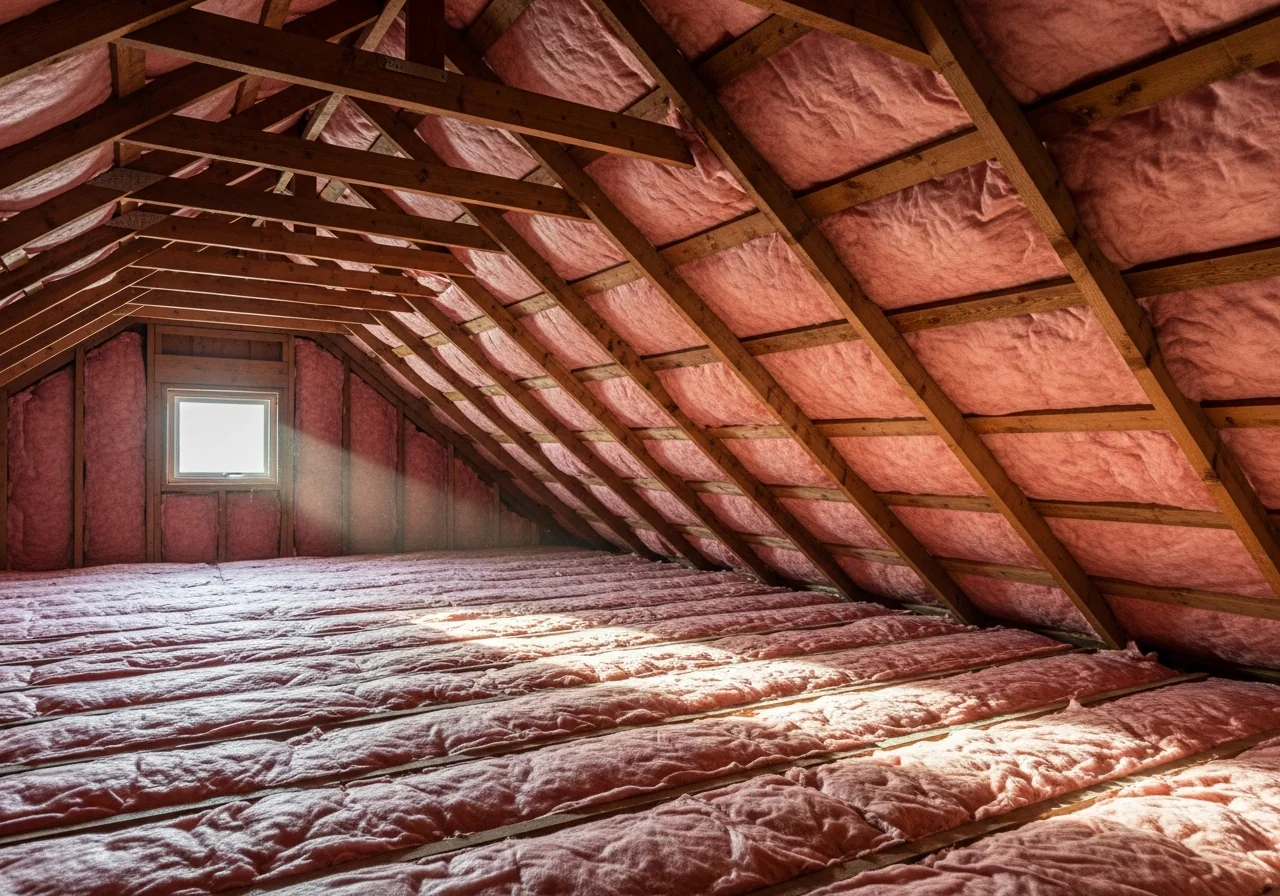
Improve your home's energy efficiency and comfort. We match you with vetted local insulation contractors — from attic upgrades to full-home solutions that lower year-round energy bills.
Up to 50%
Properly insulated homes use 30-50% less energy for heating and cooling.
Even Temps
Consistent temperatures throughout your home, fewer drafts and hot spots.
Quieter Home
Insulation absorbs sound, reducing noise from outside and between rooms.
Eco-Friendly
Lower energy use means reduced carbon footprint and emissions.
Complete insulation solutions for every area of your home
Blown-in, batt, or spray foam insulation for attics. The most cost-effective way to improve home energy efficiency.
$1,500 - $5,000
Retrofit blown-in insulation for existing walls or new insulation for construction projects.
$1,000 - $4,000
Open-cell and closed-cell spray foam for superior air sealing and insulation performance.
$1.50 - $6 per sq ft
Insulation for below-grade spaces including rigid foam, spray foam, and vapor barriers.
$2,000 - $8,000
Safe removal of old, damaged, or contaminated insulation before new installation.
$1 - $2 per sq ft
Seal gaps, cracks, and penetrations to prevent air leakage and maximize insulation effectiveness.
$500 - $2,500
Understanding your options
Pros: Low cost, DIY-friendly
Cons: Gaps reduce effectiveness, can irritate skin
Best For: Attics, walls, floors
Pros: Fills irregular spaces, professional install
Cons: Can settle over time
Best For: Attics, existing walls
Pros: Eco-friendly (recycled paper), good coverage
Cons: Absorbs moisture, can settle
Best For: Attics, walls, retrofits
Pros: Air sealing, soundproofing
Cons: Lower R-value, absorbs water
Best For: Interior walls, soundproofing
Pros: Highest R-value, moisture barrier, structural strength
Cons: Highest cost
Best For: Basements, crawl spaces, rooflines
Pros: Moisture resistant, versatile
Cons: Must be cut to fit, seams need sealing
Best For: Basements, exterior walls
DOE recommendations for different US regions
| Climate Zone | Attic | Walls |
|---|---|---|
| Zone 1 (Miami, FL) | R-30 to R-49 | R-13 to R-15 |
| Zone 2 (Houston, TX) | R-30 to R-60 | R-13 to R-15 |
| Zone 3 (Atlanta, GA) | R-30 to R-60 | R-13 to R-15 |
| Zone 4 (St. Louis, MO) | R-38 to R-60 | R-13 to R-21 |
| Zone 5 (Chicago, IL) | R-38 to R-60 | R-13 to R-21 |
| Zone 6 (Minneapolis, MN) | R-49 to R-60 | R-13 to R-21 |
| Zone 7 (Duluth, MN) | R-49 to R-60 | R-21 |
What we see homeowners regret most often
Insulation slows heat — air sealing stops drafts. Doing one without the other can leave you with ~30% less benefit. Seal top plates, can lights, and chases first.
Northern attics need R-49 to R-60. Southern can do R-30 to R-49. Going under-spec voids most utility rebates and feels barely different from no insulation in winter.
Stuffing batts to the eaves traps moisture and rots your roof deck. Use baffles to keep airflow from soffit to ridge — non-negotiable in attic insulation.
Closed-cell spray foam turns your home into a sealed box. Without HRV/ERV ventilation, indoor air quality and humidity become real problems.
What you'll actually save on heating and cooling
Typical savings on heating & cooling after a proper attic upgrade.
Most attic and wall jobs pay back in under 7 years from utility savings.
25C credit covers 30% of insulation cost up to $1,200/year through 2032.
TrustyFix is a matching service — we don't perform the work ourselves. We connect you with vetted local pros who do.
Share your service type, ZIP, and timeline in about 2 minutes. Free, no account required.
We route your request to up to 3 vetted pros in our network who serve your area.
Matched pros call or text you with quotes — typically within hours.
Compare quotes, check reviews, and hire whoever you trust — or no one at all.
Skip the search — we already know what service you need. Get matched with vetted local pros, or see what homeowners typically pay in 2026.
Free · ~2 minutes · No obligation to hire
2026 national average ranges - Instant results
Common questions about home insulation
The cost to insulate an entire existing home typically ranges from $4,000-$10,000, depending on home size, insulation type, and current insulation levels. Attic insulation alone costs $1,500-$5,000. New construction insulation averages $0.50-$2 per square foot of floor area. The DOE estimates proper insulation can save 15% on heating/cooling costs.
R-value measures thermal resistance - how well a material resists heat flow. Higher R-values mean better insulation. The DOE recommends different R-values for different climate zones and home areas. For example, attics in cold climates should have R-49 to R-60, while those in warm climates need R-30 to R-49.
The best insulation depends on your situation. Spray foam offers the highest R-value and air sealing but costs the most. Blown-in cellulose is cost-effective for attics and retrofits. Fiberglass batts are budget-friendly for DIY projects. For basements and crawl spaces, closed-cell spray foam or rigid foam provide moisture resistance.
Some insulation projects are DIY-friendly. Batt insulation in accessible attics is a common DIY project. Blown-in attic insulation machines can be rented from home improvement stores. However, spray foam, wall retrofits, and crawl space work typically require professional installation for best results and safety.
Signs you need more insulation include: high energy bills, uneven temperatures between rooms, ice dams on roof in winter, cold walls/floors/ceilings, HVAC running constantly, and home built before 1980 (building codes were less stringent). An energy audit can identify exactly where insulation is needed.
Get a free estimate for home insulation from trusted professionals in your area.
Get Matched FreeNeed a vetted local pro?
Free, no obligation — takes 60 seconds