













Garage Door Buying Guide: Steel vs Wood vs Composite
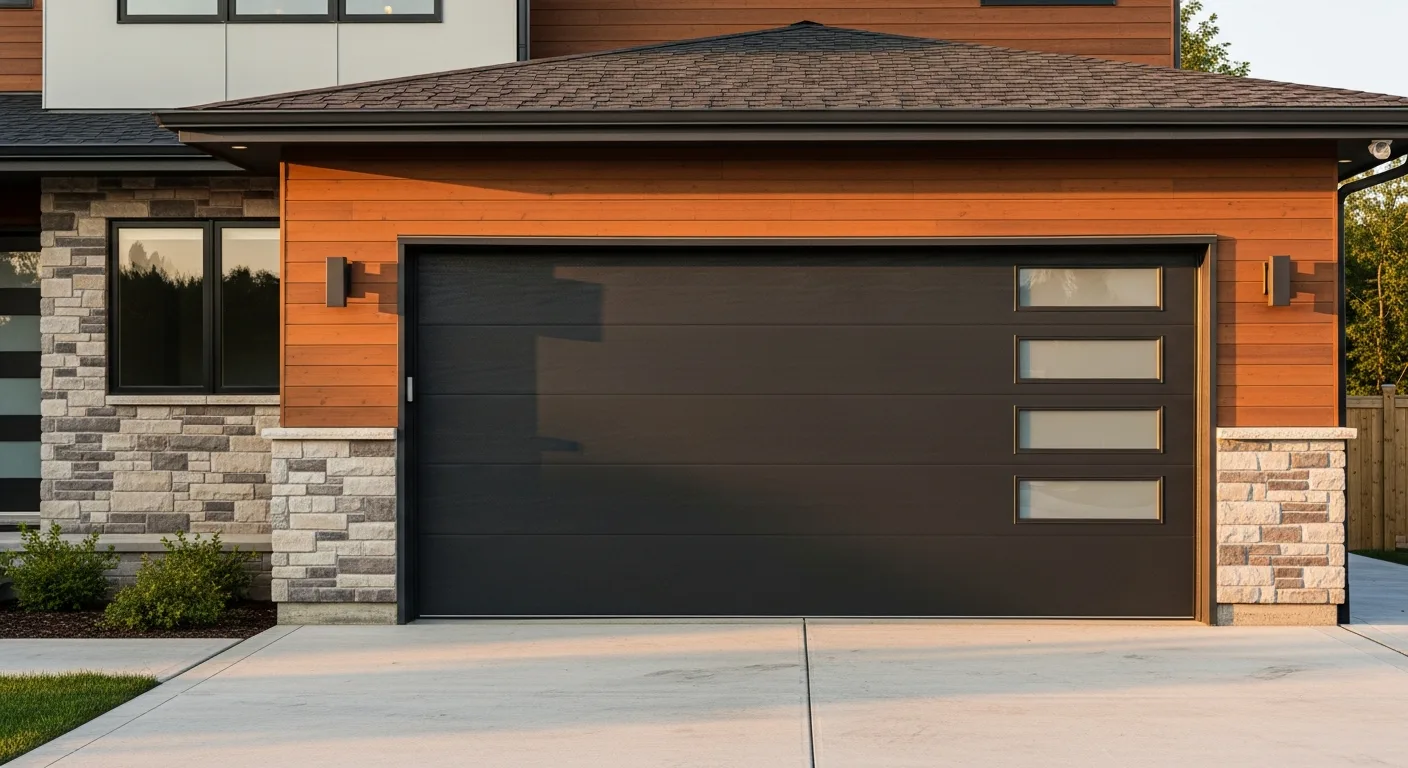
A new garage door is one of the highest-ROI home upgrades. Here's how to pick the right material, insulation, and opener.
Material comparison
Steel — best for most homes
- Price range: $800–$3,500 installed
- Lifespan: 20–30 years
- Pros: Affordable, low maintenance, fire-resistant, available with insulation, can mimic wood look
- Cons: Can dent, can rust at the bottom edge in coastal areas
Wood — best for character and high-end aesthetics
- Price range: $4,000–$15,000+ installed
- Lifespan: 20–30 years (with maintenance)
- Pros: Beautiful, customizable, premium curb appeal
- Cons: Requires re-staining or painting every 2–5 years; warps and rots if neglected; heavy (more wear on opener)
Aluminum + glass — best for modern homes
- Price range: $2,500–$8,000 installed
- Lifespan: 20–30 years
- Pros: Lightweight, rust-proof, allows natural light, contemporary look
- Cons: Glass can break; less insulation; aluminum dents easily
Composite (faux wood)
- Price range: $2,500–$6,500 installed
- Lifespan: 25–30 years
- Pros: Looks like real wood, doesn't warp/rot/insect damage, low maintenance
- Cons: Heavier than steel; limited color options
Fiberglass
- Price range: $1,500–$3,500 installed
- Lifespan: 15–20 years
- Pros: Lightweight, dent-resistant, salt-air-resistant
- Cons: Yellows over time; can crack in extreme cold
Insulation: don't skip it
Insulation is rated by R-value — higher is better. For garages:
| R-value | Best for |
|---|---|
| R-6 to R-9 | Detached garages, mild climates |
| R-12 to R-16 | Attached garages, moderate climates |
| R-18+ | Attached garages with living space above, cold climates, garages used as workshops |
Insulated doors also reduce noise and resist denting. The cost upgrade from non-insulated to R-16 is typically only $200–$500 — easily worth it.
Spring system: torsion vs extension
All garage doors counterbalance their own weight with springs (otherwise the opener motor would fry within months).
- Torsion springs — mounted above the door. Quieter, longer-lasting (~15,000–30,000 cycles), safer if they break. Standard on quality doors.
- Extension springs — mounted along the side tracks. Cheaper, less safe (require safety cables), shorter lifespan. Found on bargain doors.
Always pay for torsion. Always insist on a safety-cable-equipped install regardless of spring type.
Openers: what's worth it in 2026
Drive type
- Belt drive — quietest, longest-lasting, best for attached garages. Spend the extra $50–$100.
- Chain drive — cheapest, loudest. Fine for detached garages.
- Direct drive (Sommer/jackshaft) — wall-mounted, ultra-quiet, freeing up ceiling. Premium option ($500–$800).
Horsepower
- 1/2 HP — fine for single-car steel doors
- 3/4 HP — recommended for double doors, insulated doors, or wood
- 1 HP+ — heavy custom or oversized doors
Smart features actually worth paying for
- Wi-Fi connectivity (Chamberlain MyQ, LiftMaster) — get phone alerts, close from anywhere
- Battery backup (required by code in California; recommended everywhere)
- LED light kit (way brighter than incandescent)
- Soft-start/soft-stop (gentler on the door, longer opener life)
The full installation cost breakdown
| Line item | Typical cost |
|---|---|
| Door (16x7 steel, insulated, mid-range) | $1,200–$2,000 |
| Tracks, springs, hardware | $200–$400 |
| Belt-drive opener with Wi-Fi | $300–$500 |
| Removal of old door + disposal | $100–$300 |
| Installation labor | $300–$700 |
| Typical total: | $2,100–$3,900 |
Things that surprise homeowners during install
- The header above the door may need reinforcement for heavier doors
- Old wiring may not meet current code (GFCI required at the opener)
- Existing tracks rarely fit new doors — full replacement is standard
- Weatherstripping at the bottom AND sides should be replaced regardless
- If your floor isn't level, the door won't seal properly — concrete grinding may be needed
Maintenance schedule
Monthly
- Visually inspect cables, springs, rollers, hinges
- Listen for new sounds during operation
- Test the auto-reverse safety (place a 2x4 under the door — opener should reverse on contact)
- Test the photo eye (wave a broom in the path during closing)
Every 6 months
- Lubricate hinges, rollers, springs (use white lithium grease, NOT WD-40)
- Tighten any loose hardware
- Check weatherstripping — replace if cracked or compressed
Annually
- Test door balance: disconnect opener, lift door manually halfway. It should stay put. If it slides up or down, springs need adjustment (pro only — torsion springs are dangerous to adjust)
- Pro inspection of springs and cables (replacement is cheap; a snapped cable destroying your car is not)
Red flags when buying
- Quotes that don't itemize door, hardware, opener, and labor separately
- "Lifetime warranty" with no specifics — read what's actually covered
- Pressure to install today (springs and panels need to be measured to your opening)
- No mention of insulation R-value
- Refusal to install owner-supplied openers (some pros are fine with this; opaque markup if not)
The bottom line
A new garage door is one of the highest-impact, highest-ROI improvements you can make to your home. Spend on insulation and a torsion spring system, pick the material that fits your climate and architecture, and don't skimp on the opener. Get matched with vetted local garage door installers for accurate quotes for your home.
Sources & further reading
- DASMA — Door & Access Systems Manufacturers Association — industry standards for door construction, R-value labeling, and wind-load ratings.
- Remodeling Cost vs. Value Report — garage door replacement consistently ranks as one of the highest-ROI exterior projects.
- IBHS — Insurance Institute for Business & Home Safety — research on hurricane-rated and impact-resistant doors.
- ENERGY STAR — efficiency context for insulated doors on attached garages.
Frequently asked questions
Insulated steel is the right answer for most homes — durable, low-maintenance, and the best value. Wood and aluminum-glass make sense for high-end aesthetics; composite for wood looks without maintenance.
Yes for any attached garage, garage with living space above, or garage used as a workshop. The cost upgrade from non-insulated to R-16 is typically only $200–$500 and reduces noise, denting, and energy loss.
Steel and composite doors last 20–30 years. Springs typically last 10–15 years (15,000–30,000 cycles for torsion) and openers 10–15 years.