













8 Costly Kitchen Renovation Mistakes (And How to Avoid Them)
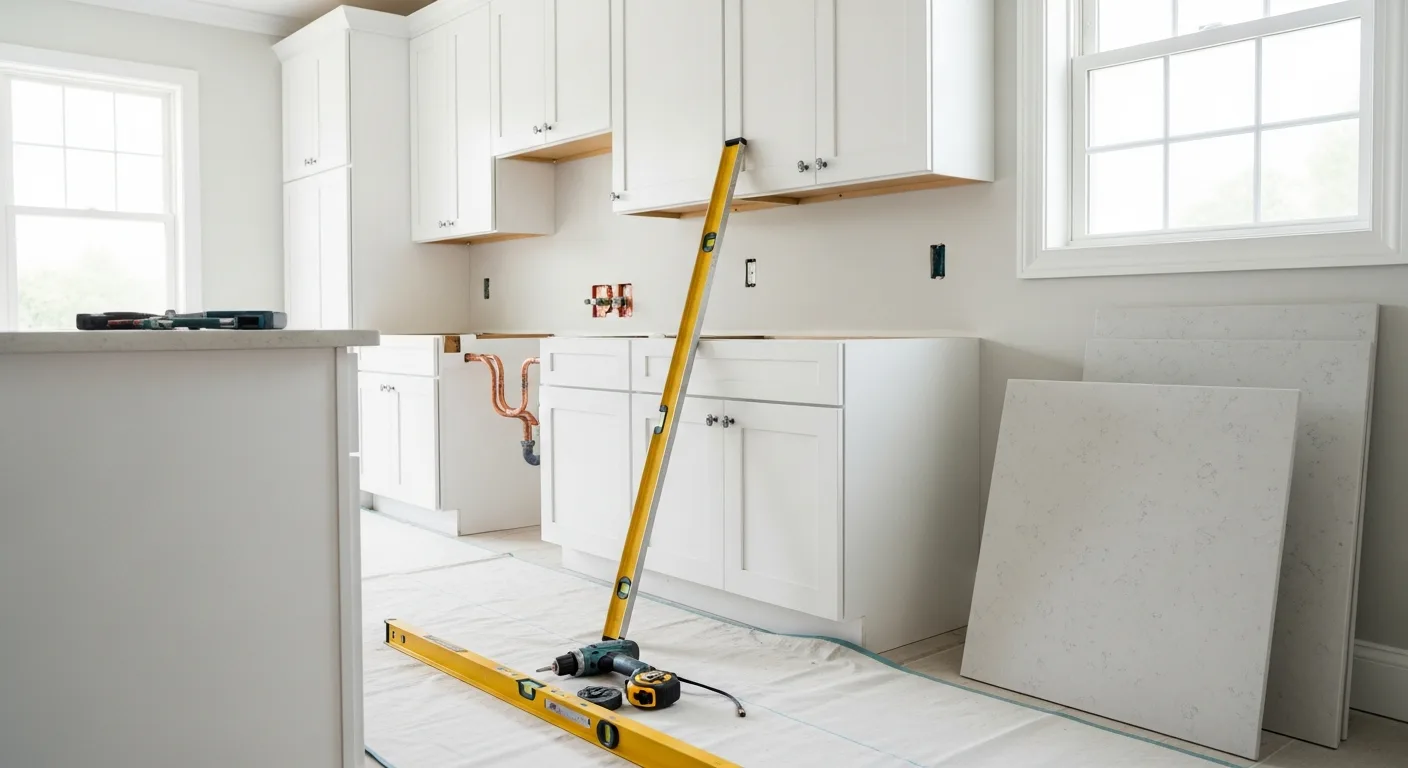
From skipping the work triangle to underestimating electrical, these are the kitchen remodel mistakes that destroy budgets.
Mistake 1: Skipping the work triangle
The classic work triangle (sink → range → fridge) still works because it's based on how cooking actually happens. The sum of the three legs should be between 13 and 26 feet, with no leg shorter than 4 feet or longer than 9 feet. Trendy "zone-based" layouts work fine in big kitchens but the work triangle is bulletproof for everyday cooking flow.
Mistake 2: Underestimating electrical work
Modern code (NEC 2023) requires:
- Two dedicated 20-amp small-appliance circuits at countertops
- GFCI protection at every countertop receptacle
- Dedicated circuits for dishwasher, disposal, microwave, and refrigerator
- AFCI protection in many jurisdictions
- Hardwired under-cabinet lighting controls
If your kitchen still has 1990s wiring, expect $2,500–$6,000 in upgrades — and don't try to skip it. Insurance will deny claims on fires traced to non-code wiring.
Mistake 3: Picking the wrong island size
Islands are the #1 most regretted decision in kitchen remodels — usually because they're too big. Rules to follow:
- Minimum 42 inches of clearance on all sides (48 inches preferred for cooking sides)
- If clearance is less than 36 inches, the island will become an obstacle
- For seating: 24 inches of width per stool, with at least 12 inches of knee depth
- If the island is also a cooking surface or sink, plan for ventilation, plumbing, and electrical from day one
Mistake 4: Choosing finishes after demo starts
The single biggest cause of timeline blowouts. Tile, cabinetry, and stone often have 4–10 week lead times. If you're picking your tile while the contractor is tearing out the old kitchen, you're already behind schedule. Pick everything before demo, in this order:
- Cabinet style and color
- Countertop material and color
- Backsplash tile
- Flooring
- Appliances (model numbers locked in — they affect cabinetry sizes)
- Plumbing fixtures (faucet, pot filler, disposal)
- Lighting (recessed, pendant, under-cabinet)
- Hardware
Mistake 5: Not planning enough storage
Kitchens get cluttered when there isn't enough specific storage. Top regrets we hear:
- No deep drawers for pots and pans (drawers are vastly more accessible than lower cabinets with shelves)
- No tall pantry pull-out
- No dedicated trash/recycling pull-out
- No appliance garage on the counter
- No knife, utensil, or spice organizers built into drawers
Mistake 6: Cheap appliances in a beautiful kitchen
A $40,000 kitchen with $1,200 worth of appliances is a tell at resale. You don't need pro-grade Wolf and Sub-Zero, but:
- Spend at least 12–15% of total budget on appliances
- Skip extended warranties; spend the money on better base models
- Counter-depth fridges look dramatically better but hold less — measure your weekly groceries first
- Induction is the new "premium" for cooktops and is faster than gas
Mistake 7: Ignoring ventilation
A range hood is not optional — it removes grease, moisture, smoke, and CO from cooking. Common errors:
- Recirculating (ductless) hoods over heavy-cooking ranges. They filter air but don't remove moisture or CO. Use ducted whenever possible.
- Hoods sized too small. Width should match the range; CFM should match cooktop BTU output (rule: 1 CFM per 100 BTU minimum).
- Mounting too high (above 36" from cooktop dramatically reduces effectiveness).
- No make-up air on hoods over 400 CFM (required by code in most jurisdictions for tight homes).
Mistake 8: Underbidding the lighting plan
Three layers of lighting are non-negotiable in a great kitchen:
- Ambient — recessed cans on a dimmer (6 inches preferred over 4-inch trims)
- Task — under-cabinet LED strips (not optional; cabinets cast shadows on every counter)
- Accent — pendants over island, in-cabinet lights for glass-front uppers
Add separately switched dimmers for each layer. Color temperature: stick with 2700K–3000K for residential warmth. 4000K reads as cold and clinical.
Bonus mistake: Skipping the design pro
A kitchen designer ($1,500–$5,000 flat fee or 5–10% of project) catches dozens of small problems that destroy daily livability. They pay for themselves in avoided change orders, supplier discounts, and a layout that actually works for how you cook.
The hidden costs almost nobody plans for
- Eating out for 6–12 weeks — easily $1,000–$3,000 you didn't budget
- Temporary kitchen setup — folding table, hot plate, mini fridge in another room
- Dust containment — a serious contractor uses ZipWalls and air scrubbers; cheap ones don't, and you'll be cleaning drywall dust for weeks
- HVAC duct adjustments if you're moving walls or ceilings
- Permits and inspections — $500–$2,000 plus delays if not factored in
The bottom line
Kitchens are the highest-stakes renovation in any home — biggest budget, longest timeline, most disruption. The good news: every mistake on this list is preventable with planning. Get matched with vetted local kitchen remodelers who can walk you through their process before you commit a dollar.
Sources & further reading
- NKBA — National Kitchen & Bath Association — the design standards (work triangle, clearances, lighting zones) referenced throughout this article.
- Remodeling Cost vs. Value Report — minor vs. major kitchen remodel ROI by region.
- NAHB Remodelers — industry association covering remodeling cost and labor trends.
- NFPA 70 (National Electrical Code) — the code your electrician follows for kitchen circuits, GFCIs, and small-appliance branch circuits.
Frequently asked questions
Picking finishes after demo starts. Cabinetry, tile, and stone often have 4–10 week lead times — late selections cause the timeline blowouts and change-order budget creep that ruin most kitchen projects.
A typical full remodel runs 6–12 weeks of active construction once permits are pulled. Add 4–10 weeks before that for design, ordering, and material lead times.
For any project over $40,000, almost always yes. Kitchen designers ($1,500–$5,000 flat fee or 5–10% of project) typically pay for themselves in avoided change orders, supplier discounts, and a layout that actually works for daily cooking.