













7 Signs Your Roof Needs Replacement (Not Just Repair)
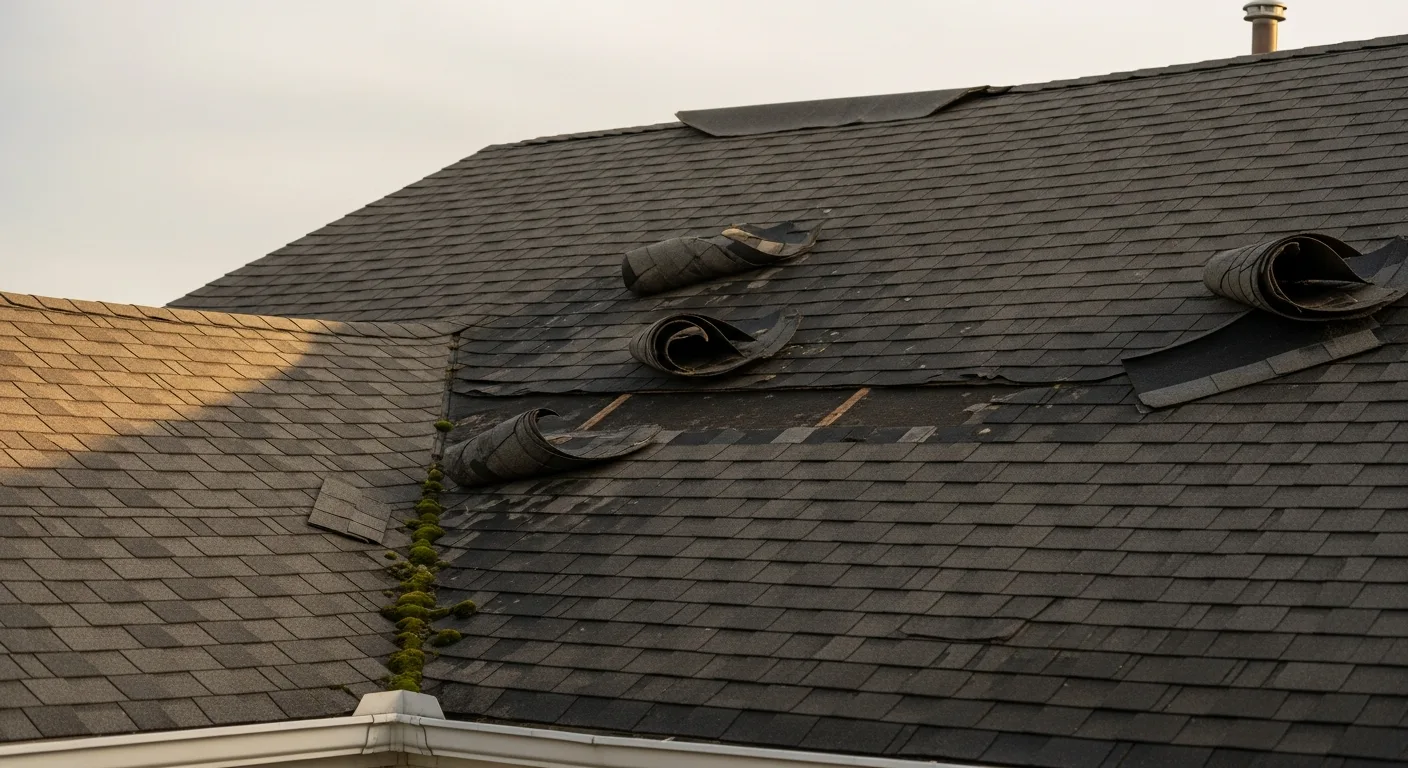
Patch jobs only go so far. Here's how to tell when it's time to invest in a full roof replacement before bigger problems hit.
1. Your roof is older than its rated lifespan
| Material | Typical Lifespan | Replace at |
|---|---|---|
| 3-tab asphalt shingles | 15–20 years | 15+ |
| Architectural shingles | 25–30 years | 22+ |
| Wood shake | 20–30 years | 20+ |
| Metal (steel/aluminum) | 40–70 years | 40+ |
| Tile (clay/concrete) | 50–100 years | 50+ (underlayment may need replacement sooner) |
Don't know how old your roof is? Check disclosure documents from when you bought the house, or ask a roofer to inspect — most can date a roof within a 3-year window from materials alone.
2. Shingles are curling, cupping, or losing granules
Asphalt shingles shed protective granules throughout their life — a small amount in the gutter is normal. Bald patches on shingles, or large quantities of granules at the bottom of downspouts, signal the asphalt underneath is being exposed to UV and breaking down.
Three failure modes to look for:
- Curling — corners turning up. Caused by age, poor attic ventilation, or water damage.
- Cupping — center sinks while edges rise. Late-stage age failure.
- Cracking/blistering — heat and UV damage that lets water into the shingle mat.
3. You can see daylight from your attic
Go up there with a flashlight on a sunny day. If you see sunlight coming through the roof deck — not just the soffit vents — water is finding the same path. Dark spots on the underside of decking or rafters are confirmation that water has already gotten in.
4. Sagging or uneven rooflines
Stand across the street and sight along the ridge. It should be perfectly straight. Any visible sag indicates structural issues — usually water-damaged decking or rafters — that demand more than a patch.
5. Active leaks or water stains on ceilings
A single leak around a vent or chimney can be a flashing repair. Multiple leaks, or stains in different areas of the house, are a different story — that's the underlayment failing across the roof.
6. Flashing failures around penetrations
Roof penetrations (chimneys, plumbing vents, skylights, vents) are sealed with metal flashing. Old flashing rusts, separates, or pulls away. If you've already had multiple flashing repairs and are seeing new leaks, the underlying roof is likely also at end-of-life.
7. Moss, algae, or vegetation taking hold
Surface algae (the dark streaks you see on shingles) is mostly cosmetic. Moss, on the other hand, lifts shingle edges and holds moisture against the roof — accelerating decay. If moss has been growing for a year or more, the shingles underneath have likely been compromised.
The "repair vs replace" decision framework
Use this rough rule of thumb:
| Condition | Action |
|---|---|
| Roof < 15 years old + isolated damage | Repair |
| Storm damage covered by insurance | Get insurance inspection first |
| Roof 15–20 years + 2 or fewer issues from this list | Repair, plan to replace within 3–5 years |
| Roof 20+ years OR 3+ issues from this list | Replace |
| Multiple leaks in different areas | Replace |
| Sagging deck or rotted sheathing | Replace (and budget for deck repair) |
What a 2026 roof replacement actually costs
National averages for a 2,000 sq ft single-story home:
- 3-tab asphalt: $5,500–$8,500
- Architectural asphalt: $8,500–$14,500
- Metal (standing seam): $18,000–$32,000
- Tile: $20,000–$45,000
Pitch, complexity (dormers, valleys, skylights), tear-off layers, and decking repair all push these higher. Get at least three line-itemized bids before signing.
How to avoid getting ripped off
- Never sign a contract with a door-knocker after a storm. "Storm chasers" are responsible for the bulk of roofing fraud nationally.
- Verify the roofer's manufacturer certifications. GAF Master Elite, Owens Corning Platinum Preferred, etc., require ongoing training and unlock longer warranties.
- Get the warranty in writing — both manufacturer (materials) and contractor (workmanship). 10 years of workmanship is a minimum standard.
- Insist on a tear-off, not an overlay. Layering new shingles on top hides problems and voids most warranties.
- Check for proper attic ventilation in the proposal — a roof without ventilation will fail early and the manufacturer will deny the claim.
The bottom line
A failing roof is the single most expensive thing you can ignore in homeownership. Interior water damage from a leaking roof can hit five figures within months. If you're seeing multiple signs from this list, get a free professional inspection now — before the next big storm.
Sources & further reading
- NRCA — National Roofing Contractors Association — industry standards for material lifespans and inspection cadence.
- InterNACHI — Roof Inspection Standards of Practice — what a professional inspector actually checks.
- IBHS — Insurance Institute for Business & Home Safety — research on roof performance in wind, hail, and wildfire.
- ENERGY STAR — certification used when discussing reflective and cool-roof materials.
Frequently asked questions
If three or more of these are true — age past 75% of rated life, widespread granule loss, multiple missing or curling shingles, daylight in the attic, or active interior leaks — replacement is almost always cheaper long-term than continued patching.
Standard 3-tab shingles last 15–20 years; architectural shingles 20–30 years; premium designer shingles 30–50 years. Lifespan drops sharply with poor attic ventilation or improper installation.
Average asphalt-shingle replacement runs $8,500–$25,000 depending on roof size, pitch, layers being torn off, and decking repairs. Metal, tile, and synthetic slate cost 2–4x more but last 2–3x longer.