













Solar Panel ROI in 2026: How Long Until It Pays Off?
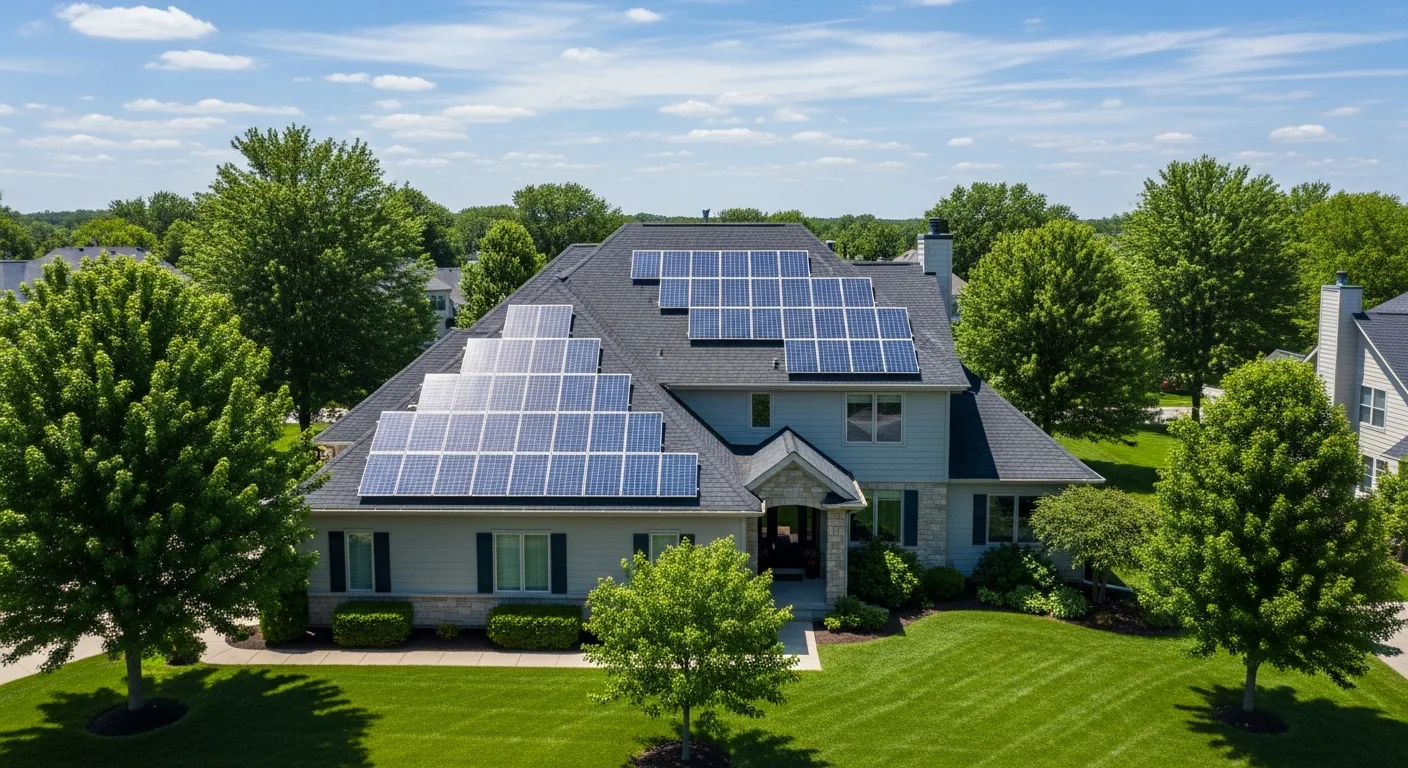
Federal tax credits, state rebates, and falling panel prices have changed the solar math. Here's the real payback period in 2026.
The 2026 cost of solar
The national average installed cost is now $2.85–$3.50 per watt before incentives. For an average 8 kW residential system, that's roughly:
- Gross cost: $22,800–$28,000
- Federal tax credit (30%): –$6,840 to –$8,400
- Net cost (typical): $14,000–$22,000
State and utility incentives can knock another $1,000–$10,000 off depending on location.
What you'll actually save
The right way to think about solar isn't "panels save money" — it's "your power bill goes down by some amount each month for 25+ years." Real-world annual savings depend on three things:
- Your current electric rate (national average: 16¢/kWh; California: 30¢+; Hawaii: 41¢)
- How much sun your roof gets (azimuth, tilt, shading)
- Your home's annual electricity use (national average: ~10,800 kWh)
For an average 8 kW system in a typical U.S. climate:
- Annual production: 9,500–13,500 kWh
- Annual savings at 16¢/kWh: $1,520–$2,160
- Annual savings at 25¢/kWh: $2,375–$3,375
Payback period by region
| Region | Avg. Electric Rate | Net System Cost | Annual Savings | Payback |
|---|---|---|---|---|
| Northeast (NY, MA, CT) | 22¢ | $18,000 | $2,200 | 8.2 years |
| Mid-Atlantic (NJ, PA, MD) | 17¢ | $16,500 | $1,800 | 9.2 years |
| Southeast (FL, GA, NC) | 14¢ | $15,500 | $1,650 | 9.4 years |
| Texas | 14¢ | $14,500 | $1,750 | 8.3 years |
| California | 30¢ | $19,500 | $3,200 | 6.1 years |
| Mountain West (CO, AZ, UT) | 13¢ | $15,000 | $1,800 | 8.3 years |
| Pacific NW (WA, OR) | 12¢ | $17,000 | $1,300 | 13.1 years |
These are averages. Your specific quote depends on roof orientation, shading, panel selection, and local incentives.
The full 25-year picture
With a 25-year panel warranty and panel degradation of about 0.5%/year, here's what an "average" U.S. solar system looks like over its lifetime:
- Net upfront investment: ~$17,000
- 25-year electricity savings (with 3% utility rate inflation): ~$58,000
- 25-year net profit: ~$41,000
Loan vs cash vs lease — what actually pays off
Cash
Best total returns. Highest barrier to entry. ~30% IRR over the system lifetime in most markets.
Solar loan (10–25 year)
With current solar loan rates around 7–9%, a properly sized loan still produces positive cash flow from day one in most markets — your monthly loan payment is lower than your old electric bill. Watch for hidden "dealer fees" (sometimes 15–25% of system cost) baked into low-APR offers.
Solar lease / PPA
Zero down, but you don't own the system, can't claim the federal tax credit, and the lease often complicates home sale. Math typically saves you 10–20% on your power bill versus 80%+ for an owned system. Almost always the worst financial choice if you can qualify for a loan.
Should you add a battery?
Battery storage (Tesla Powerwall 3, Enphase IQ, FranklinWH) costs $10,000–$20,000 installed and qualifies for the 30% tax credit on its own. Worth it if:
- Your area has frequent outages
- Your utility has poor net-metering rules (e.g., California NEM 3.0)
- You have time-of-use rates with expensive evening peaks
- You're in a wildfire-PSPS zone
Pure ROI math, batteries usually add 3–5 years to payback. The value is resilience and rate arbitrage — not just savings.
Common solar mistakes that hurt ROI
- Oversizing or undersizing the system. A good installer pulls 12 months of utility bills before quoting.
- Ignoring shading. Even partial shade on one panel can drop a string's output 30%+. Microinverters or DC optimizers solve this.
- Skipping a roof inspection first. Don't install panels on a roof with less than 10 years of life left.
- Falling for "free solar" sales pitches. Almost always a lease or PPA in disguise.
- Not getting 3 quotes. Solar pricing varies wildly — 30%+ price differences between installers in the same market are normal.
What to look for in an installer
- NABCEP-certified installation team (industry's gold standard)
- 10+ years in business (matters because warranties run 25)
- Tier-1 panel brands (REC, Q Cells, Silfab, Panasonic, LG)
- Microinverters or DC optimizers (Enphase or SolarEdge)
- 25-year manufacturer warranty + 10-year workmanship warranty in writing
- Production guarantee (best installers will guarantee a minimum kWh output)
The bottom line
Solar in 2026 isn't just for early adopters or environmentalists — it's a straightforward financial product with a 6–10 year payback in most U.S. markets and 15+ years of nearly free electricity after that. Get matched with vetted local solar installers for a free site assessment and accurate pricing for your home.
Sources & further reading
- DOE — Homeowner's Guide to the Federal Tax Credit for Solar PV — the authoritative explainer on the 30% Residential Clean Energy Credit.
- IRS Form 5695 — Residential Energy Credits — the actual tax form used to claim the credit.
- DSIRE — NC State Clean Energy Technology Center's database of state & utility solar incentives.
- NREL PVWatts Calculator — National Renewable Energy Lab's free production estimator; what reputable installers use to size systems.
- SEIA — Solar Energy Industries Association — industry data on installed costs and market trends.
Frequently asked questions
For most U.S. homeowners, payback runs 6–10 years after the 30% federal tax credit, depending on local utility rates, sun exposure, and whether your state offers net metering or additional rebates.
Yes. The Residential Clean Energy Credit covers 30% of system cost through 2032, then steps down to 26% in 2033 and 22% in 2034 before expiring.
Studies from Lawrence Berkeley National Laboratory and Zillow consistently find owned (not leased) solar systems add roughly $15,000 in value to a median U.S. home.
Buying or financing with a solar loan almost always wins the long-term math. Leases and PPAs eliminate upfront cost but transfer the tax credit and most savings to the leasing company, and can complicate a future home sale.